
Winter forest birds – preparation and field knowledge
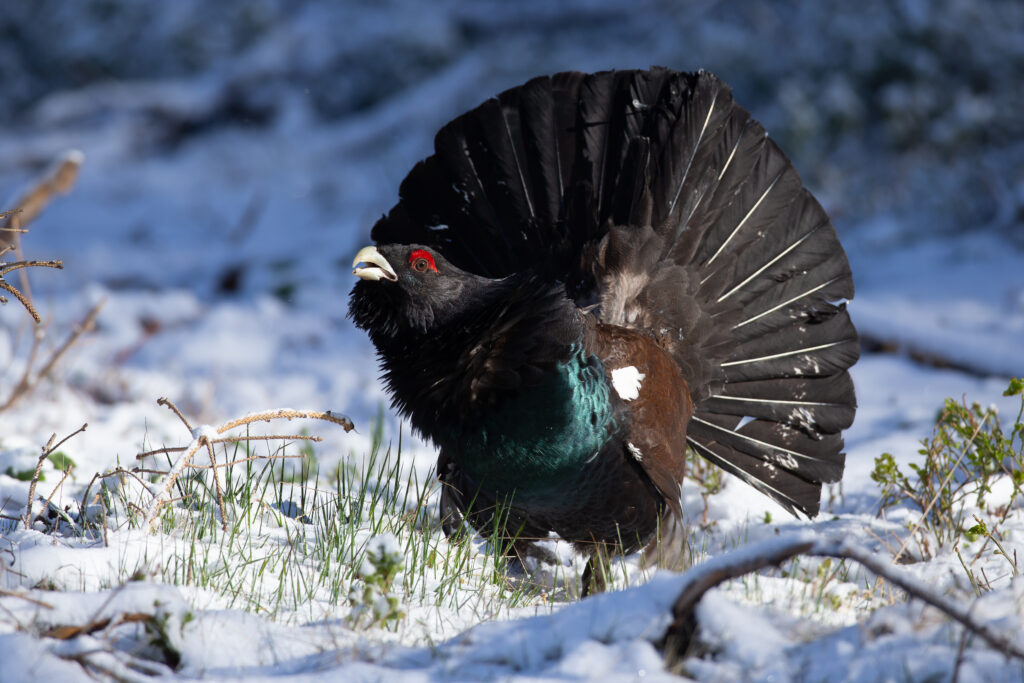
Male capercaillie displaying in a snowy spring landscape. Photo: Zwerger-r-leben / Wikimedia Commons. CC BY-SA 4.0. Original image and license: see links below.
Original image · License CC BY-SA 4.0

Winter Bird Hunting in the Nordic Wilderness
When winter blankets the forests of northern Scandinavia in snow, life changes for both wildlife and hunters. Days grow shorter, temperatures can fall far below freezing, and snow muffles the sounds among the pine trees.
For many Nordic hunters, winter forest bird hunting is one of the season’s most rewarding experiences. It requires patience, knowledge of the natural environment and the ability to notice small details in a vast forest landscape.
Capercaillie and black grouse are the main species associated with this traditional form of hunting. During winter, these birds may feed high in the trees, where they can sometimes be spotted from a distance.
Capercaillie and Black Grouse – Two Different Forest Birds
The capercaillie is the largest member of the grouse family in Europe. The male is easily recognised by its powerful body, dark plumage and broad tail. Capercaillie typically inhabit extensive forest areas, often favouring mature pine forests with varied vegetation.
The male black grouse is smaller and has a distinctive lyre-shaped tail. Black grouse are often associated with more open woodland, bogs, clearings and forest edges.
During winter, capercaillie feed largely on pine needles, while black grouse eat buds and catkins from trees such as birch.
Understanding the different tree species and habitats in an area can therefore provide valuable insight into where birds may be found.
Where Can Forest Birds Be Found in Winter?
Finding birds is often the greatest challenge.
Capercaillie may feed in pine trees within extensive forest areas. Black grouse can sometimes be observed in birch trees along bog edges, clearings and more open woodland.
A useful starting point is to become familiar with the different habitats within the hunting area. Look for transitions between mature pine forests and bogs, stands of birch and areas that offer both food and shelter.
Binoculars are essential. By stopping regularly and carefully scanning the treetops, it is sometimes possible to spot a bird that would otherwise remain almost invisible.
Bird movements vary with weather, food availability and disturbance. No location guarantees success.
Patience and Moving Quietly Through the Forest
Winter forest bird hunting often involves travelling slowly through the woodland, stopping frequently to observe birds feeding in the trees.
Snow conditions make a considerable difference. Firm snow can make travelling easier, while deep powder turns even a short distance into a demanding journey.
Skis can be an effective way to explore larger areas. They also allow hunters to experience the forest without the noise of a motor.
The goal is not necessarily to cover as many kilometres as possible, but to remain observant.
Sometimes, a long period of quiet watching reveals more than several kilometres of walking.
Essential Equipment for Winter Hunting
The right equipment makes a significant difference during cold winter days.
Layered clothing helps regulate body temperature during both movement and stationary observation. Spare gloves, warm socks and an insulated sitting pad can be invaluable when temperatures drop.
Good binoculars are particularly important for observing and identifying birds at a distance.
A map, compass and GPS device or phone with offline maps are useful for navigation. Remember that phone batteries can lose capacity rapidly in extreme cold.
A thermos filled with a hot drink and an energy-rich packed lunch can also make the day safer and more enjoyable.
Safety and Responsible Hunting
Safety must always come before the opportunity to take a bird.
Shooting at birds perched in trees requires particular care when assessing the direction of fire and what lies beyond the target. Never take a shot unless the bullet’s potential path and a safe backstop can be established.
Hunters must also identify the species with certainty and check the applicable hunting seasons, local regulations and any restrictions.
Winter conditions can change quickly. Cold temperatures, wind, snowfall and limited daylight must all be considered when planning a hunting trip.
Respect for wildlife also means declining uncertain shots and avoiding unnecessary disturbance.
More Than Just Hunting
Winter forest bird hunting is about much more than harvesting game.
It is about the silence among the pine trees, tracks in fresh snow, coffee in the winter cold and the opportunity to develop a deeper understanding of the forest.
Even a day without seeing a bird can be a memorable outdoor experience.
For those willing to slow down, observe and understand the landscape, every winter day offers something new to discover.
This is what Wildmarka is all about – hunting, outdoor knowledge and authentic experiences from the Nordic wilderness.